← Project overview

Spatially-steered generation

Some questions require a small image region; others require a long path or several separated regions. In this experiment, coding agents receive requests about the size and shape of the regions their inverse programs use. We measure these regions by masking parts of the image.

The spatial pattern of a world is measured by masking regions and checking whether the inverse program’s answer changes or the program raises an error. It describes what the program depends on, not where people look.
View the nine patterns ↓ · Browse the pattern gallery →

Three scales × three shapes

Nine patterns: spatial extent × geometry

Rows describe spatial extent. Columns describe geometry. Select a cell to see recorded examples from worlds with that measured pattern.

EXTENT ↓
SHAPE →
Compactone concentrated region
Pathlikean elongated or sparse pattern
Multipartseparate components
Focalsmall extentRegionalintermediate extentDistributedbroad extent

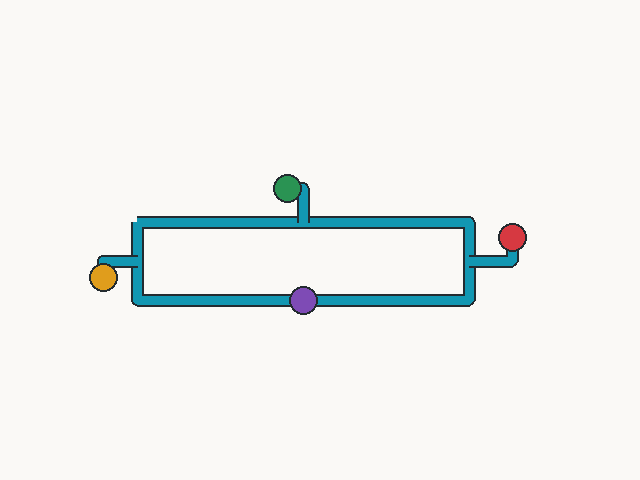
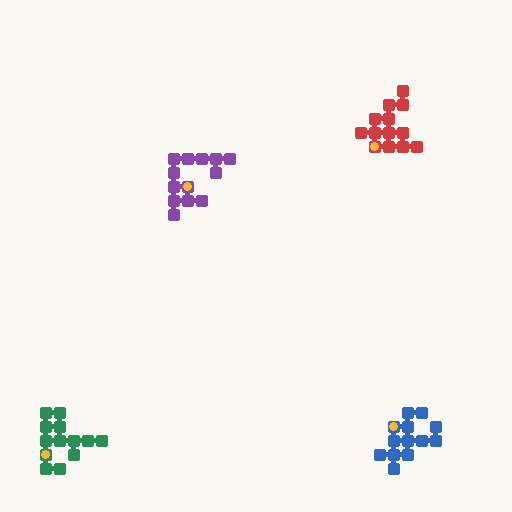
The colored shapes are schematic illustrations of each pattern, not measurements. A pattern can occur anywhere in an image.

Focal · compact

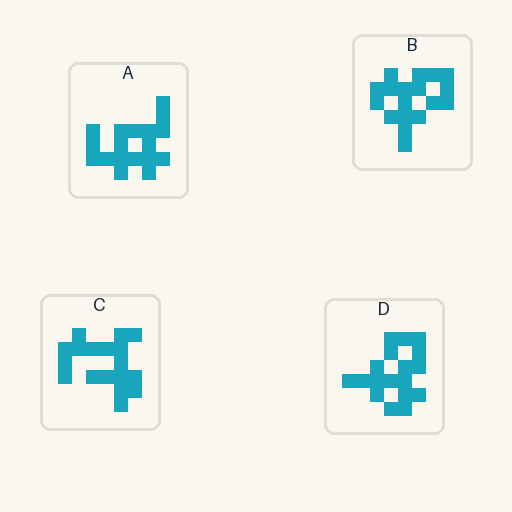
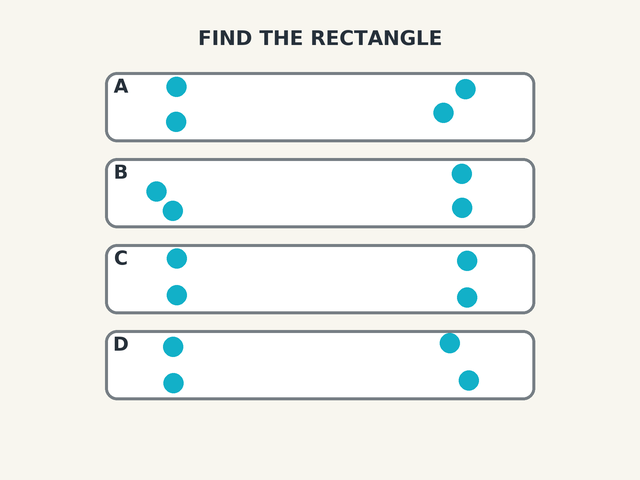
Solid window search
Measured Focal · compact

Solid window search

Which labeled tile contains a completely filled 2-by-2 cyan square? Answer A, B, C, or D.

Recorded answer

C

Try all three instances ↗

The world matched its requested pattern. 100% pattern agreement across 6 measured scenes.

Locate the steering wheel
Measured Focal · compact

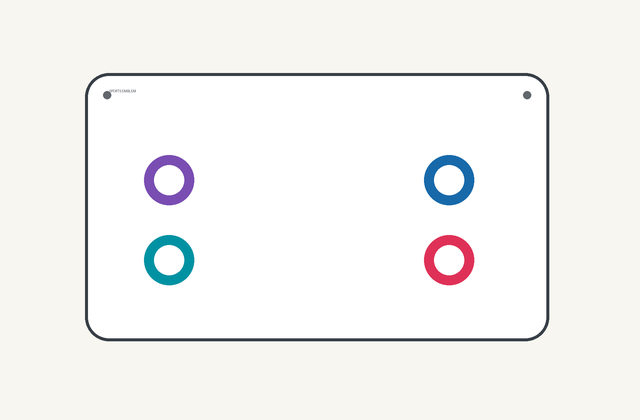
Locate the steering wheel

Which half of the centered dashboard visibly contains the steering wheel? Answer left or right.

Recorded answer

left

Try all three instances ↗

The world matched its requested pattern. 100% pattern agreement across 6 measured scenes.

More questions with this pattern →

These examples come from worlds that passed replay and had complete measurements, a stable pattern, and a pattern matching the request. Each label summarizes measurements across several scenes. The individual image shown here may have a different measured pattern.

How patterns are measured

Measuring spatial patterns with masking

The pattern grid above has 3×3 cells. The measurement below uses a separate 8×8 probe grid to test regions of each image.

Try a mask position
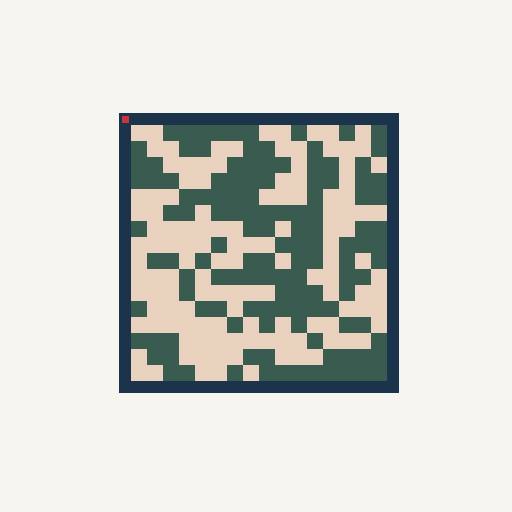
Recorded colored-island question used to illustrate mask positions

Select a square to see which region would be masked.

This illustration shows the mask location only. It does not run the inverse program or show whether masking that region changes its answer.

  1. 01

    Record the original answer

    Run the inverse program on the unmodified image.

  2. 02

    Mask one region at a time

    Replace pixels with the median color of the image’s outer three-pixel border. Each probe extends one quarter-cell beyond its nominal boundary on every side.

  3. 03

    Check the response

    A position is affected if the answer changes or the inverse raises an error. An error on a masked image is evidence of sensitivity; an error on an unmodified verification image still fails verification.

  4. 04

    Summarize the geometry

    Measure the extent and shape of affected positions. Repeat across four to six distinct scenes, then aggregate their geometry to assign a world-level pattern.

The fixed pattern rules

Scale

Focal: normalized span below 0.30.
Regional: 0.30 to below 0.65.
Distributed: 0.65 or above.

Shape

Multipart: at least two four-connected components.
Pathlike: otherwise, elongation ≥ 2.75 or bounding-box fill ≤ 0.55 with nonzero span.
Compact: all remaining cases.

Four-connected positions share a horizontal or vertical edge. Elongation describes how stretched the affected region is; fill measures how much of its bounding box is occupied. These rules operate on measured probe geometry, not on the objects’ semantic meaning.

Complete measurement: at least two thirds of analyzed scenes expose an affected region. Stable pattern: at least two thirds of all analyzed scenes receive the aggregate pattern. The world pattern uses median geometry across scenes; completeness and stability are separate conditions.

From measurement to generation

Requesting a spatial pattern

The controller chooses a target pattern before an episode. The coding agent receives the request alongside its reasoning instructions, implementation demonstrations, and campaign history.

REQUEST

Regional + pathlike

An example request for where the answer’s evidence should lie.

GENERATE

Write a new world

The agent writes the question, sampler, renderer, forward program, and inverse program.

MEASURE

Check the pattern

A separate masking analysis assigns the observed pattern.

The requested pattern is guidance, not an acceptance gate.

A mismatch does not reject a world that otherwise passes acceptance. A rejected submission can still receive a pattern measurement.

How the next request is chosen

The controller keeps at most three worlds per pattern. Its fixed request rule favors patterns with fewer stored worlds, more past target matches or fewer observations, and patterns not requested in the preceding episode. It penalizes repeated misses.

Because the controller keeps at most three worlds per pattern, these stored examples are far fewer than all accepted worlds.

Observed results

Pattern matching and coverage

95.5%835 of 874 replay-verified worlds with complete measurements matched their request
7.09 vs. 5.20mean patterns represented per campaign with and without steering
6.38 vs. 4.26mean patterns in equal-count samples of ten worlds, across 35 campaign pairs
Match rates for each set of worlds
Population Total Measured Matches Match rate
All episodes 1,179 981 918 93.6%
Accepted worlds 903 902 860 95.3%
Replay-verified worlds 875 874 835 95.5%

Match rates use the measured population as their denominator. One replay-verified world had an incomplete measurement. Steered campaigns produced 3.35 accepted worlds per episode-hour, compared with 4.95 without steering.

Steered and unsteered campaigns were run separately, so these differences in coverage and throughput are descriptive, not causal. Masking shows which regions the inverse program depends on, not which regions a person needs.

Return to the main results →